
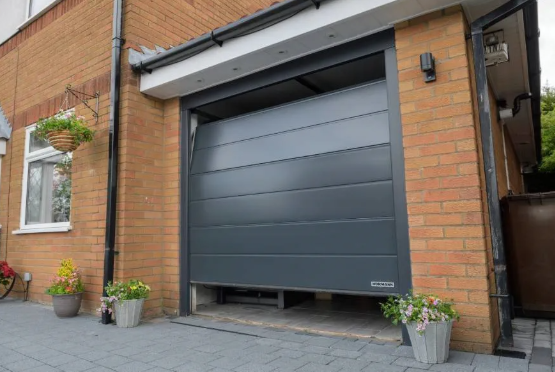
Most people spend more time picking a kitchen splashback than a garage door. The splashback gets noticed. The garage door just gets used — twice a day, every day, in heat and rain and a hurry. Sectional garage doors tend to quietly reward careful thinking. They also tend to quietly punish the lack of it. Understanding why starts with looking past the obvious.
The Driveway Problem Nobody Mentions
Short driveways define a huge portion of Australian suburban living. On those blocks, a door that swings outward before lifting is a low-grade daily frustration. Stop too close and it clips the bonnet. Stop too far back and the car is halfway onto the footpath. Sectional doors skip all of that. They track straight up — no outward swing, no precise parking ritual. It sounds trivial. Ask anyone who has dealt with the alternative for a few years and the answer changes quickly.
What Summer Actually Does
Western-facing garages in Australian summers are not just warm. By mid-afternoon they are hostile. An uninsulated door offers almost nothing in the way of resistance — the heat moves straight through and into whatever sits on the other side of that wall. Sectional garage doors with insulated panel cores genuinely slow that transfer down. Not eliminate it, but slow it. Enough that a garage becomes usable through the worst months rather than a space everyone avoids from November onward. For anyone using the garage as a workshop or gym, that difference is not small.
Where Security Really Lives
Checking the lock feels like checking security. It is not really. The actual vulnerability in older tilt-style doors lives in the panel flex and the side gaps — both of which can be worked open without specialist tools. Sectional construction removes most of that. The panels interlock. The door sits rigid inside its tracking. There is far less to exploit. In homes where the garage connects internally to the house — which covers most modern Australian builds — that rigidity carries genuine weight.
Automation That Holds Up
Most door styles can be automated. Not all of them stay that way reliably. Sectional garage doors move in a straight vertical line, which puts even, predictable load on the opener motor every single time. No arc, no uneven tension, no mechanism fighting against the physics of the movement. In a household where the door runs several times daily, that consistency compounds. Fewer breakdowns. Longer opener life. Less of that particular frustration where the door decides not to cooperate on a Tuesday morning when nobody has time for it.
Sealing Out What Australia Throws Around
Dust comes fast in many parts of the country. Wind-driven rain finds gaps that seem invisible until water is appearing somewhere it should not be. The continuous perimeter seal on a sectional door does something other styles struggle to match — it closes off the sides, the top, and the floor contact all at once. The interior stays cleaner across seasons. Stored tools, equipment, vehicles — everything inside benefits from that over time. Not dramatically on any single day. Noticeably across years.
Looks Without Apology
There is still a widespread assumption that a practical door is a plain door. It stopped being true a long time ago. Sectional doors come in panel profiles and finishes that work convincingly across contemporary rendered facades, traditional brick, and Hamptons-style exteriors. Timber-look finishes in particular read well from the street now — they have improved considerably. The garage door covers a significant portion of a home’s visible front face. Treating it as a visual afterthought is a choice that tends to show in the overall impression the property makes.
Conclusion
Sectional garage doors earn their reputation through performance, not advertising. They handle Australian heat, dust, tight blocks, and daily repetition without making a fuss about it. The insulation works quietly. The seal holds. The automation stays reliable longer than most alternatives. Homeowners who looked past the initial decision and thought about years of actual use tend to land here. It is not a complicated conclusion — it just requires asking the right questions before the door goes in, not after.