
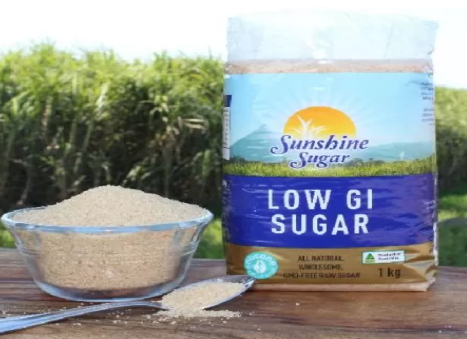
The conversation around sugar has become so loaded it is hard to find anything genuinely useful inside it. One side condemns it entirely. The other overcorrects defensively. What gets lost between those positions is something far more practical — cane sugar is one of the most functionally complex ingredients in any kitchen, and most people using it daily have little real understanding of what it is doing beyond making things taste sweet. That gap between perception and actual function is where the honest conversation needs to start.
The Molasses Nobody Talks About
White sugar and raw sugar begin as the same product. What separates them is what gets removed during processing. Refining strips out molasses — the dark, mineral-rich syrup naturally present in sugarcane juice — leaving behind the neutral white crystals most kitchens reach for automatically. Raw sugar holds onto some of that molasses. Which is why it carries colour, a coarser texture, and a flavour that reads noticeably warmer and more complex. That retained molasses is not a branding distinction. It changes how the sugar actually performs in a recipe, especially anywhere depth of flavour matters as much as sweetness does.
Caramelisation Is Not Simple
When sugar meets heat, what happens is not a single reaction. It is a cascading sequence of chemical changes that produce hundreds of distinct flavour compounds — some bitter, some nutty, some with an almost fruity quality — depending entirely on temperature and timing. Cane sugar caramelises within a specific, predictable range. Many alternative sweeteners do not share that range. Honey browns differently. Coconut sugar behaves differently again. Anyone who has swapped sweeteners in a caramel or confectionery recipe and gotten unpredictable results has run into this problem without knowing what caused it.
What Sugar Does to Texture
Sweetness is the obvious part. Texture is what most people miss entirely. Sugar is hygroscopic — it attracts moisture and holds onto it, which is what keeps a baked good soft for days rather than stale by the next morning. It also weakens gluten structure during mixing. That is why high-sugar batters produce tender, delicate crumbs rather than chewy or dense ones. Reduce the sugar significantly in a recipe and the texture shifts in ways that rarely get identified as sugar-related. They just get written off as a bad batch.
Fermentation Needs Specific Behaviour
There is a reason cane sugar has been the preferred fermentation substrate in brewing and distilling for generations. It is not tradition for its own sake. Yeast metabolises sucrose efficiently and consistently, producing reliable results without the flavour interference that some alternative sugars introduce into the process. Bread making works the same way — sugar feeds yeast activity during proofing, influencing rise time and crust colour through metabolic behaviour, not just quantity. How the sugar behaves in that environment matters as much as how much of it is present.
Preservation Is About Concentration
Sugar preserves food by drawing water out of microbial cells through osmosis. That process dehydrates bacteria and prevents spoilage from taking hold. But it only works when sugar concentration reaches a specific threshold. Below that point, the preservative effect is incomplete — regardless of how much sugar the recipe seems to include. Traditional jam recipes use quantities that look excessive to modern eyes for exactly this reason. The sugar is not there for sweetness alone. It is creating conditions where spoilage organisms cannot establish. Reducing it without compensating elsewhere shortens shelf life in ways that tend to catch people off guard.
The Consumption Pattern Problem
Sugar research consistently points to quantity and delivery mechanism as the variables that matter — not source. Liquid sugar consumed in a drink produces a different metabolic response than the same amount eaten inside a solid food where fibre and protein slow absorption down. The problems attributed specifically to cane sugar are more accurately problems of how much sugar enters the diet through ultra-processed products, and how rapidly it arrives. That is a food system and consumption pattern issue. Not an argument against an ingredient being used with actual understanding.
Australia’s Sugarcane Industry
Queensland’s sugarcane industry supports regional communities and significant export markets in ways that rarely enter the nutritional conversation about the product it produces. Australian mills have used bagasse — the fibrous material left after juice extraction — to generate electricity for their own operations for decades. That level of industrial circularity adds context to what is otherwise a reductive debate about a genuinely complex agricultural product. The ingredient being argued about at dinner tables is the end point of an industry considerably more sophisticated than the argument itself.
Conclusion
Cane sugar rewards examination rather than reflexive judgement. Its functional properties — caramelisation behaviour, moisture retention, fermentation activity, preservation mechanics — are specific and not easily replaced by alternatives that behave differently under the same conditions. The legitimate concerns around sugar are about consumption patterns and food system design, not about an ingredient being used thoughtfully and with understanding. That distinction matters. And it changes everything about how the ingredient gets used in a kitchen.