
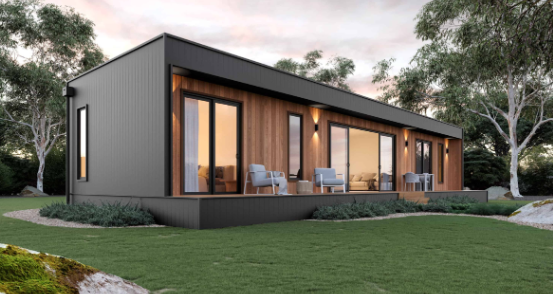
Most homeowners sitting on a generous block have absolutely no idea they are leaving money, opportunity, and real convenience completely untouched. Not out of laziness — but simply because nobody has laid out the less obvious reasons why this decision carries such weight in today’s Australian property climate. Building a granny flat is no longer just a practical afterthought tucked behind the main house. It has quietly become one of the sharper moves a homeowner can make right now.
The Depreciation Angle Nobody Mentions
Here is something that rarely enters the conversation. A newly constructed secondary dwelling qualifies for depreciation deductions when it is rented out. The structure itself — walls, flooring, fixtures, fittings — depreciates over time, and that depreciation can be claimed at tax time. A quantity surveyor produces a depreciation schedule once construction is complete. Many owners are genuinely caught off guard by how much this figure offsets their taxable rental income each financial year. It is a legitimate financial layer that most people discover far too late.
Why These Tenants Stay Longer
The common assumption is that a granny flat competes with apartments for tenants. It really does not. People who specifically seek secondary dwellings want something apartments cannot offer — a private entrance, no shared walls, no body corporate drama, no lifts, no noise echoing through a corridor. That appeal draws in a particular type of long-term tenant who has little interest in moving. High turnover is where landlords quietly bleed money. Granny flats, done well, tend to attract the kind of tenants who simply stay put.
What Setbacks Actually Mean for Your Build
When building a granny flat, most people rush straight into layout ideas before they understand how boundary setbacks shape what is physically possible. Minimum required distances from side fences and rear boundaries will directly control the footprint available on any given block. Getting a proper site measure done before a single sketch is drawn saves weeks of painful backtracking with a builder later. The shape and orientation of a block matter considerably more than raw land size alone.
The Insurance Oversight That Catches People Out
Adding a dwelling changes the risk profile of a property in the eyes of an insurer. If the existing home insurance policy is not updated before or during construction, any claim connected to the granny flat may be reduced or rejected outright. It sounds like a minor administrative task. It is not. This is exactly the kind of gap that surfaces at the worst possible moment. Contacting the insurer before the build wraps up should sit on every project checklist without exception.
How Resale Actually Plays Out
Properties with secondary dwellings attract a narrower buyer pool — but that pool is far more motivated than the general market. Investors and multigenerational families are not browsing casually. They are actively searching, often pre-approved, and ready to commit. In a flat or slow market, that concentrated and purposeful demand keeps resale outcomes noticeably more resilient than comparable single-dwelling blocks in the same street. That is a dynamic most people do not consider until they are already selling.
Approval Timelines Are Not Equal
Not every council moves at the same pace. Some process secondary dwelling applications within a few weeks. Others carry backlogs that stretch timelines considerably — particularly in certain metropolitan fringe areas. Understanding early whether a project qualifies for state-level complying development, which can bypass council assessment entirely, or whether it requires a full Development Application, changes the entire project schedule. Locking in a builder before confirming this is a mistake that causes genuine frustration down the track.
Smaller Layouts Often Win
A compact, well-designed granny flat frequently outperforms a larger and generic one — whether for rental consistency or day-to-day liveability. Oversized layouts on tight blocks tend to sacrifice outdoor space, cross-ventilation, and natural light in exchange for an extra room that rarely justifies the trade-off. Good north-facing orientation, covered outdoor access, and thoughtful storage will make a modest dwelling feel far more comfortable than a sprawling but poorly considered one ever will.
Conclusion
The real conversation around building a granny flat rarely gets past surface-level talking points. Rental returns and property value are genuine outcomes, but the fuller picture includes tax depreciation, tenant stability, insurance obligations, setback realities, and a resale dynamic that behaves differently to standard residential property. Homeowners who move past the obvious and plan with precision are the ones who genuinely get the most from this decision. A secondary dwelling, approached with care and the right information, is a serious long-term asset — not simply an extra room out the back.