
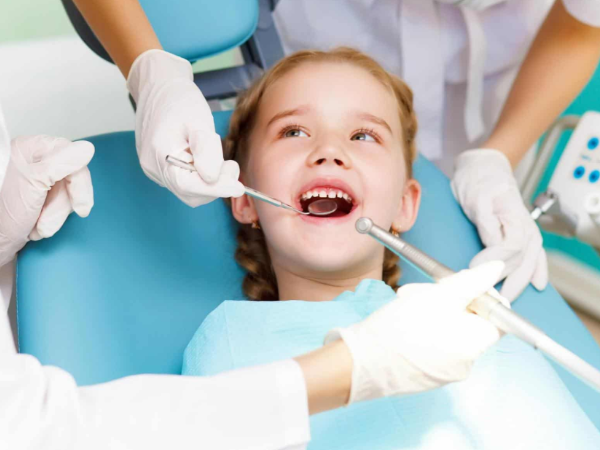
A child’s first experiences with the dentist tend to follow them for decades, in ways that most parents do not fully appreciate until they notice their own adult anxiety in a dental chair and try to trace where it came from. Somewhere in childhood, dental visits became either a routine, manageable part of life or something to be dreaded and avoided. That difference rarely comes down to the condition of a child’s teeth at any given visit. It comes down to how those visits were handled, who was handling them, and whether the environment was genuinely built around a child’s experience rather than simply scaled down from an adult one. A children’s dentist in Central Coast spends their working life shaping exactly this — the relationship a child will carry with them long after the appointment ends.
First Visits Set the Tone for Everything After
The instinct many parents have is to wait until a problem appears before introducing their child to the dentist, reasoning that there is little point in a visit when nothing seems wrong. This approach often backfires in a specific way — a child’s first dental experience becomes associated with pain, intervention, or something going wrong, which sets up exactly the anxiety pattern parents were hoping to avoid. A first visit that happens before any problem exists, framed around exploration and familiarity rather than treatment, gives a child the chance to form their first associations with curiosity rather than apprehension. Children’s dentist practices that understand this design their early appointments specifically around this principle, often achieving very little in terms of clinical work during a first visit and a great deal in terms of the relationship being established.
Children Communicate Discomfort Differently
Adults can usually describe pain with reasonable precision — where it is, what it feels like, when it started. Children, particularly younger ones, often cannot do this in the same way, and a dentist working primarily with adult patients may not have developed the specific skills needed to read what a child is actually communicating through behaviour rather than words. A child who becomes suddenly quiet, who starts avoiding certain foods without explanation, or whose behaviour changes around mealtimes may be signalling discomfort that they do not have the vocabulary to describe directly. A children’s dentist in the central coast who works with this age group daily develops an intuition for these indirect signals that a general practice dentist, however skilled, may simply not have had the same opportunity to build.
Growth and Development Change What Normal Looks Like
A child’s mouth is not a smaller version of an adult’s mouth — it is a developing system where what is normal changes continuously as teeth emerge, shift, and are eventually replaced. Patterns that would be concerning in an adult’s mouth can be entirely expected at certain stages of a child’s development, and patterns that look unremarkable can actually signal something that benefits from early attention. Understanding this developmental context shapes everything from how concerning a particular finding actually is, to the timing of interventions that work much better when addressed at the right developmental stage rather than too early or too late. This contextual knowledge is built specifically through working with children across the full span of their dental development, not through occasionally treating a child within a general practice.
Anxiety Management Is a Skill, Not Just Kindness
Being friendly and patient with children is necessary but not sufficient when it comes to managing dental anxiety effectively. Genuine anxiety management involves specific techniques — how procedures are explained in age-appropriate language, how much control a child is given over small decisions during an appointment, how the pacing of a visit responds to a child’s visible stress signals in real time. A dentist who has refined these techniques across years of working primarily with anxious children produces a fundamentally different experience than one who is simply being nice without the underlying technique. The difference shows up most clearly in how a child behaves at their next visit, and the one after that.
Parents Are Part of the Appointment Too
The way parents behave and respond during a dental appointment has a demonstrable influence on how their kid feels it, and a children’s dentist who understands this works with parents as much as with the child. Guidance on how to speak about impending sessions at home, how to react if a kid displays fear beforehand, and how to manage the time of separation if a parent has to step back during treatment all affect the result in ways that happen before and after the clinical appointment itself.
Conclusion
The goal of paediatric dental care extends well beyond the condition of a child’s teeth at any single visit. A children’s dentist in Central Coast who understands child development, communication, and anxiety management is shaping how that child will relate to dental care for the rest of their life. That outcome is harder to measure than a clean check-up, but it matters considerably more in the long run.