
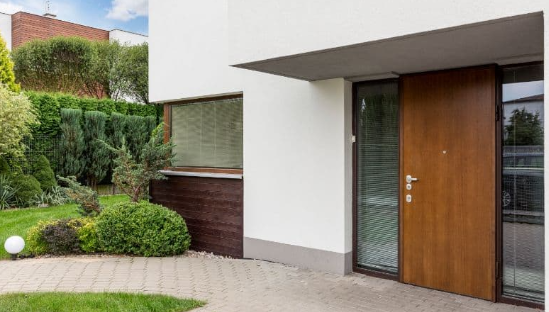
Paint colour gets more attention than the door itself. That is genuinely strange when you think about it. A door takes the hit every single day — heat, cold, humidity shifts, attempted break-ins, and decades of use. Paint just sits there. Door manufacturers are not all working to the same standard, and that gap becomes obvious only after the fact, usually when a frame has warped, a seal has failed, or a lock cylinder no longer lines up the way it should. By then, the decision has already been made. Knowing what separates the serious ones from the rest — before the purchase — is what this piece is actually about.
Timber Moisture — The Detail Nobody Prints on a Brochure
Timber doors carry a reputation built on heritage. The problem is that reputation does not always reflect the actual product sitting in front of you. The question worth asking is not whether it is solid timber, but where the timber was dried and to what moisture content. Australia’s interior humidity does not behave like Europe’s or North America’s. Timber kiln-dried to an overseas standard and then shipped here can absorb or release moisture until it finds its own equilibrium — and that process means movement. Warping. Gaps. Sticking. Manufacturers who dry their timber specifically for the conditions it will actually live in produce a door that holds its shape through a wet June and a scorching January alike. That information rarely appears on a spec sheet, so asking directly is the only way to find out.
Fire Ratings Have Fine Print Worth Reading
A fire-rated door has passed a test. What is easy to miss is that the test was passed by a specific combination — particular door, particular frame, particular hardware, particular installation method. Swap out any one of those elements and the rating may no longer apply, even if the replacement looks identical. This matters in commercial builds subject to the National Construction Code, where non-compliant doors create compliance liability that falls on the builder or the property owner. Manufacturers worth trusting will provide full documentation on exactly which hardware and frame configurations maintain the certification. Ones who are vague about it are asking the buyer to take a risk they might not even know they are taking.
Glazing Integration Is Where Cheap Doors Cut Corners
Glass panels change a door’s performance significantly. The glazing unit — double-glazed or laminated — often gets the credit or the blame, but the real variable is how that unit sits in the door. Rubber gaskets that do not compress evenly, beading that flexes under wind pressure, frame sections that conduct cold straight through the profile — all of these undermine whatever the glazing specification says on paper. Door manufacturers who handle glazing integration in-house, rather than leaving it to whoever is on site that day, produce a more consistent and predictable result. It is a reasonable question to put to any supplier: do you test the complete glazed door set as a unit, or just the glass?
Hardware Compatibility Is Not a Small Detail
Doors fail at the hardware. It is almost always the hardware. Hinges rated below the actual door weight allow the leaf to sag gradually until closing becomes a two-handed job. Lock cylinders that sit even slightly off-centre from the keep create the feeling of security without the substance. Panic hardware bolted onto a door construction it was never designed for introduces a weak point in exactly the place it should not exist. Manufacturers who specify compatible hardware as part of the product — not as an afterthought — and who test under load before anything leaves the factory, are the ones whose products hold together across years of real use. Open-ended hardware compatibility is a warning sign worth taking seriously.
Lead Times Tell You More Than a Brochure Will
How long a manufacturer takes to deliver is useful information. How consistently they hit that window is more useful still. A company with genuine visibility over its own production process can quote a lead time and mean it. One that consistently revises timelines is usually signalling shallow material inventory, constrained production capacity, or dependence on a supply chain it does not really control. For builders managing multiple trades on a single project, a door supplier who shifts dates creates a ripple effect that costs money. Asking about typical lead time variation — not just the headline figure — gives a more honest read on what a working relationship with that manufacturer actually looks like.
Conclusion
The real test of any supplier is how they talk about the details that do not photograph well — timber moisture content, frame tolerances, hardware load ratings, fire certification documentation. Marketing language is easy to produce. Specific, verifiable answers to specific questions are harder to fake. The right door manufacturers are the ones who do not get evasive when those questions come up. Properties where those details were taken seriously tend to show it, not immediately, but steadily, across every season that follows. A door chosen that carefully stops being a commodity and starts being something the building actually relies on.