
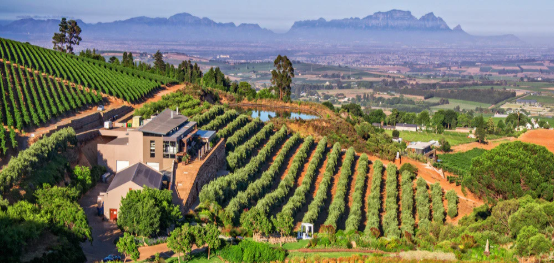
Most travellers pass through Somerset West without a second glance, heading to Stellenbosch or Franschhoek instead. That oversight works in favour of those who do stop. The wine farms in Somerset West sit within the Helderberg Ward — a sub-appellation that punches well above its reputation. Estates here are still approachable, winemakers talk to visitors, and wines are priced on what’s in the bottle, not what’s in the name.
The Helderberg Effect Is Real
Late afternoon in the Helderberg Ward feels different to anywhere else in the Winelands. Cold air drops off the mountain and rolls through the vineyards sharply, right when the fruit is at its ripest. Viticulturalists call it the Helderberg effect. It slows sugar build-up without stripping flavour, producing Cabernet Sauvignon with a structural backbone and natural acidity that warmer inland valleys cannot replicate. It’s not a marketing angle — it’s a weather event that winemakers here have built entire philosophies around.
Granite Soils Do the Heavy Lifting
Below the surface is where a lot of the real work happens. Decomposed granite drains fast and holds little water. Vine roots go deep looking for moisture through the dry summer — far deeper than on more fertile ground. Deep roots mean smaller berries, thicker skins, and wines with genuine concentration and tannin density. Many farms here barely irrigate, not to win sustainability awards, but because the soil pushes the vine toward self-sufficiency. Winemakers on richer soils spend considerable effort trying to replicate what this ground does naturally.
Old Vines Nobody Talks About
Quietly, some of the most compelling wine in the Western Cape is coming off old Chenin Blanc and Cinsault blocks that have sat on wine farms in Somerset West for decades. During the years when Cabernet dominated conversation, these plantings were mostly ignored. Now those forgotten blocks are producing single-vineyard releases with a savoury texture that young vines simply cannot match. Many are made in very small quantities and don’t make the standard tasting menu. Worth asking about specifically.
Harvest Timing Sets This Region Apart
Harvest runs later here than in most surrounding sub-regions. The ocean proximity keeps temperatures cooler for longer, giving grapes more time on the vine. That extended hang time lets phenolic ripeness catch up with sugar ripeness — which matters enormously in the finished wine. It reduces the need for interventions like acidification. Wines from this ward tend to taste complete rather than corrected, and the freshness comes from the vineyard, not the winery.
What the Restaurant Menus Reveal
Pay attention to what estate kitchens are cooking. Slow-braised lamb, aged beef, roasted root vegetables with char on them — these are not random menu choices at Somerset West wine estates. Chefs here build dishes that can hold their own against wines with serious tannin structure. A light plate would get swallowed whole. When a kitchen understands its cellar that well, it tells you something about how the whole operation is run.
Boutique Estates vs. Big Names
There is a split worth knowing about. Larger estates have international distribution and tasting rooms that run like clockwork. Smaller producers sell most of what they make directly from the cellar door. The boutique end is where the more adventurous drinking happens. Without export targets, smaller winemakers make calls purely based on the vintage in front of them — unconventional blends, releases held back because they need another year. That freedom rarely survives at scale.
Morning Visits Change Everything
Most people show up to wine farms after lunch. The palate is already working against them, and tasting rooms are at peak capacity. Morning visits here are quieter. The Cape Doctor wind hasn’t picked up, staff are unhurried, and there’s room for an actual conversation. Tasting rooms that feel transactional by afternoon can feel quite personal before midday. It’s a small shift in timing that most visitors never think to try.
Conclusion
The wine farms in Somerset West do not trade on glamour. What they offer is specificity — a particular soil, a particular wind, a winemaking approach that shows up consistently in the glass. That is harder to manufacture than a famous name. Skipping this ward in favour of more talked-about destinations is a mistake that keeps getting made. It does not have to.