
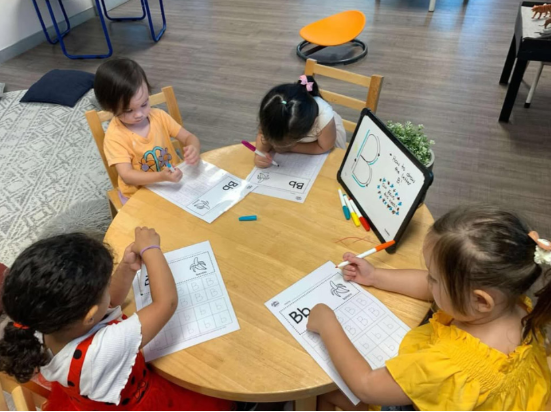
Nobody warns parents that the years before school are the ones that stick. A child who spent months learning to disagree without screaming, who figured out a lost game does not mean the world ends — that child arrived at school carrying something no worksheet could teach. Finding the right early learning centre in Gold Coast is not a box to tick. It is the first real decision parents make about who they want their child to become.
Separation Anxiety Is Not the Problem
Parents treat drop-off tears as something to push through fast. Experienced educators read it differently. A child protesting at the gate is showing secure attachment — they know someone loves them enough to miss. The child who walks in without looking back sometimes carries a quieter worry. Good centres do not rush either. They sit with the discomfort and let trust develop. That teaches children unfamiliar things become familiar — a lesson they draw on repeatedly.
Boredom Has a Purpose
A child saying they have nothing to do is not a scheduling failure. Left unfilled, that gap forces the brain to generate its own solution. Centres that pack every minute with structured activity train children to need constant input. Those that leave open stretches — no agenda, no screen, no adult directing — build something harder to measure but more valuable. Children who occupy themselves with nothing become adults who think without prompting.
Routine Is Not About Obedience
Most parents assume routines exist to keep children manageable. Only half true. For a young child, predictability is neurological safety. When a child knows what comes next, the brain stops anticipating — it is free to focus, explore, and take social risks. A quality early learning centre in Gold Coast uses routine not as a control mechanism but as a foundation children can push against. The child who tests limits inside a stable structure is doing exactly what healthy development looks like.
Reading Aloud Does More Than Teach Words
Storytime looks passive. It is not. When a child hears a character feel jealous or embarrassed, they rehearse emotions not yet lived through. Children read to regularly develop a wider emotional vocabulary, which shapes how they communicate distress and read others’ behaviour. An educator who chooses books with intention — not just cute illustrations — quietly shapes a child’s inner life.
Messy Play Is Not Optional
Mud kitchens, wet sand, finger paint — supervised chaos to a visiting adult. To a child, one of the few places where there is no right answer and no possibility of failure. Most of childhood involves being assessed — drawing inside lines, answering correctly, sitting still. Sensory play strips all of that away. Children who regularly engage in open-ended messy play develop stronger problem-solving instincts and a higher tolerance for ambiguity. When selecting a early learning centre in Gold Coast, look at whether messy play is protected in the daily programme or quietly phased out for tidiness.
Friendships at This Age Are Practice Runs
Young children are not capable of true friendship — they are rehearsing it. They fall out, forget about it shortly after, and start again. That cycle is not immaturity. It is how children learn repair. A child who has experienced rupture and reconnection with a peer carries an unconscious map for how relationships recover after conflict. Adults who struggle to apologise often never practised it when the stakes were low.
What the Classroom Walls Reveal
Walk into any early learning room and look at the walls. Identical artwork — same colours, same shapes, clearly adult-guided — means children are learning to replicate. Wildly different creations where you cannot tell what something is mean children are learning to express. That distinction sounds subtle. It predicts a great deal about how a child approaches creative thinking.
Conclusion
The right early learning centre in Gold Coast will not advertise everything it does well. Most of what matters happens quietly — at drop-off, during free play, in how an educator responds to a child nobody is watching. Visit with specific questions. Ask what happens when a child refuses to join in. Ask how educators handle fallouts. Those answers tell parents far more than any brochure ever will.